Game Design School Projects
Between 2023 to 2024 I worked on some Design Game Projects within Futuregames as a Game Design Student. I learned a lot of things within these projects as I wanted to showcase my choices, ideas and design for how I went with each one of these projects.
These are the projects in order from top to below:
Betwixt Game Project > Health Decrease Game > Redd’s 3D Adventure.
Betwixt. - 7-Month Game Project (Futuregames, 2024)
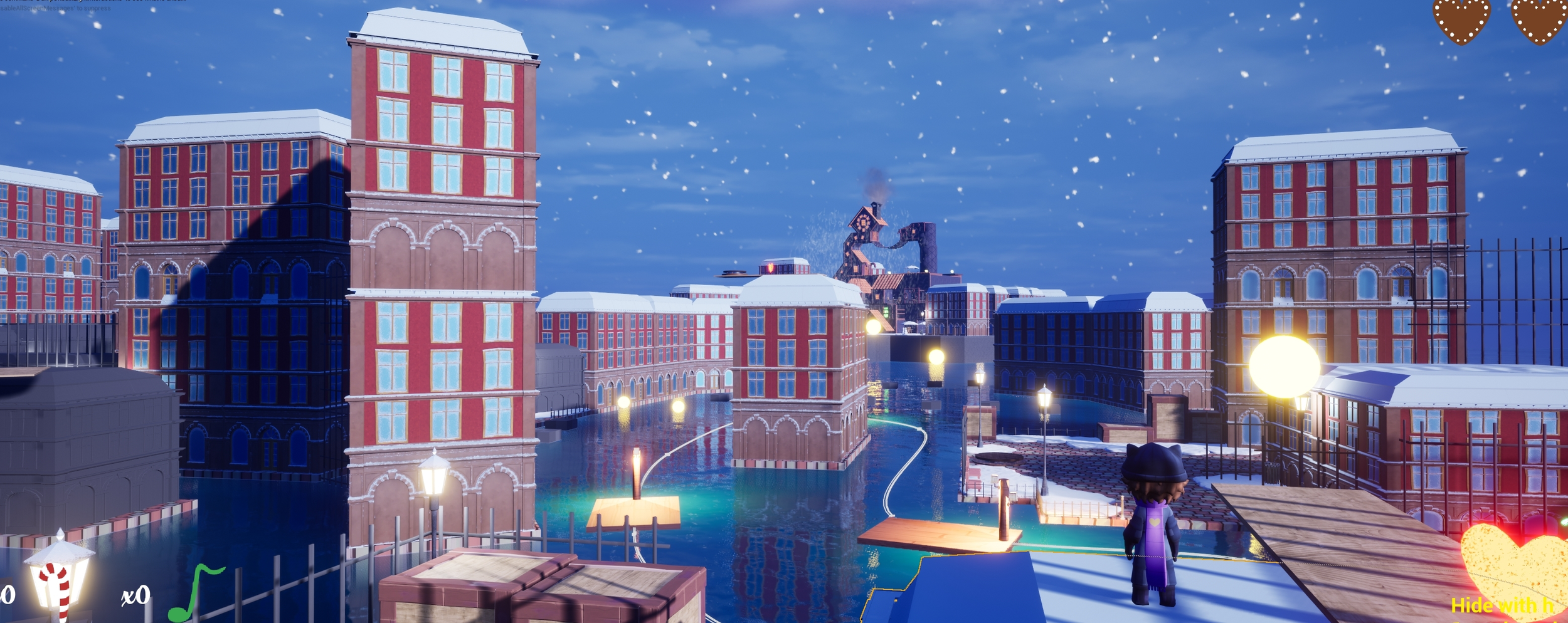
Roles: Level Designer · QA Lead · VFX Artist
Game Engine: Unreal Engine 5
Team Size: 22 students
Overview:
As part of a 7-month LIA project at Futuregames, our team developed a 3D platformer prototype based on a children’s book provided by a publishing company. Throughout development, I worked across multiple roles, contributing to level design, quality assurance, and visual effects.
Level Design
I collaborated with the Level Design team from early development, concepting to blockout and playable iterations. My responsibilities included:
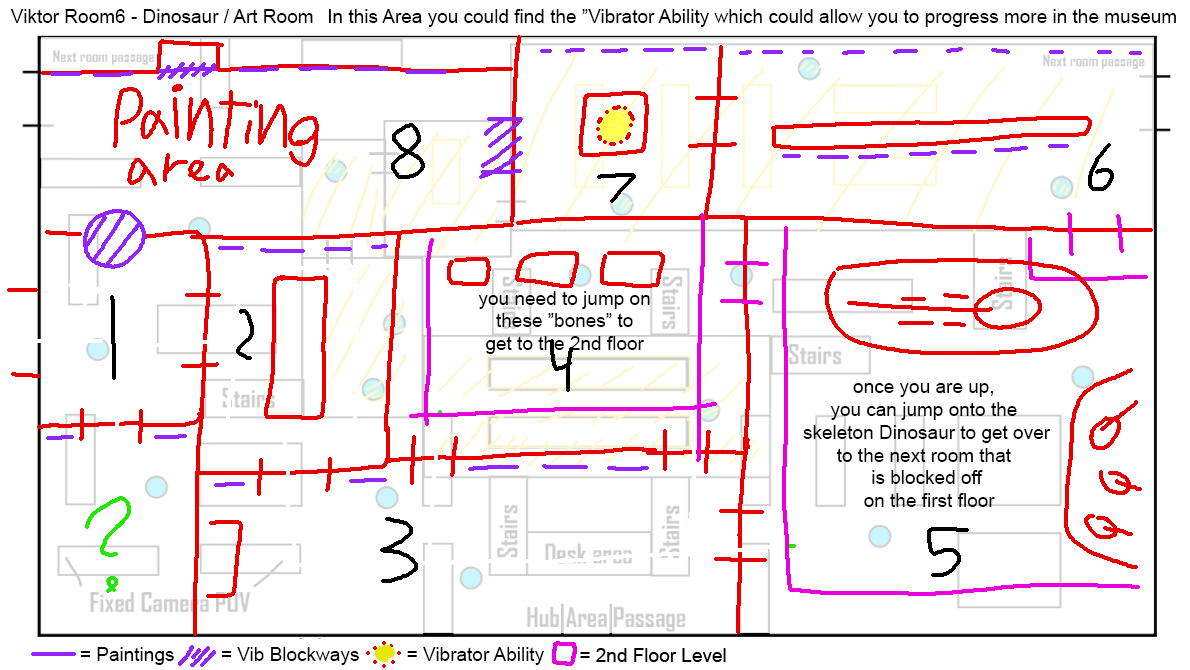
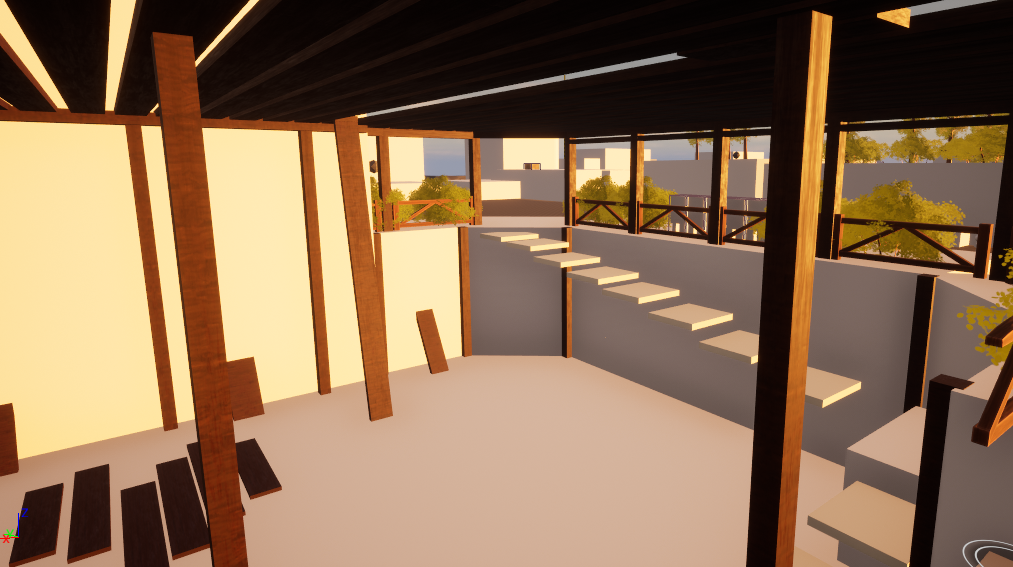
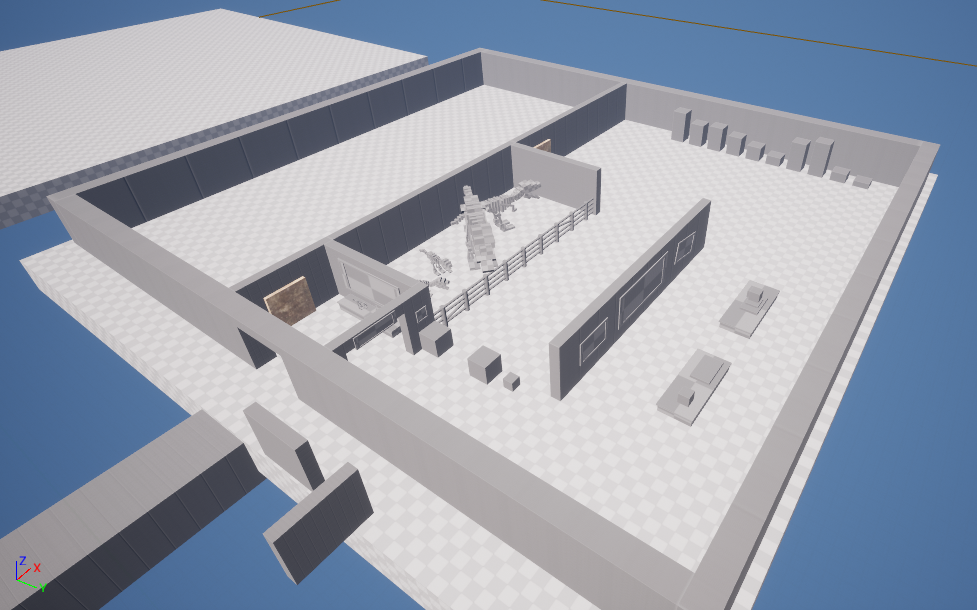
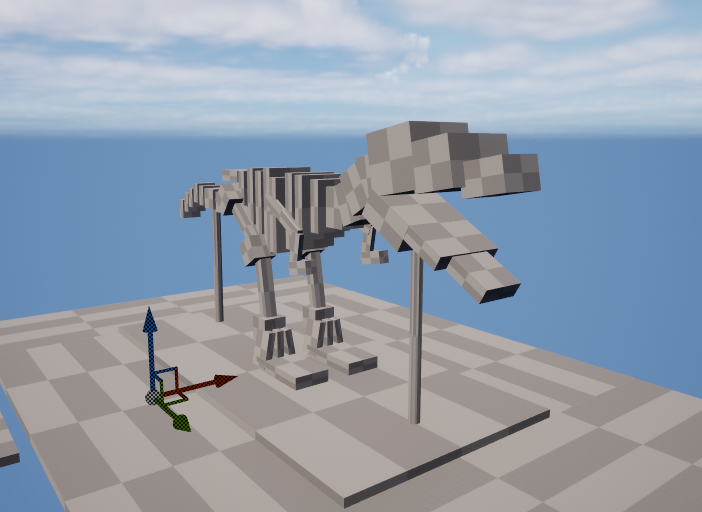
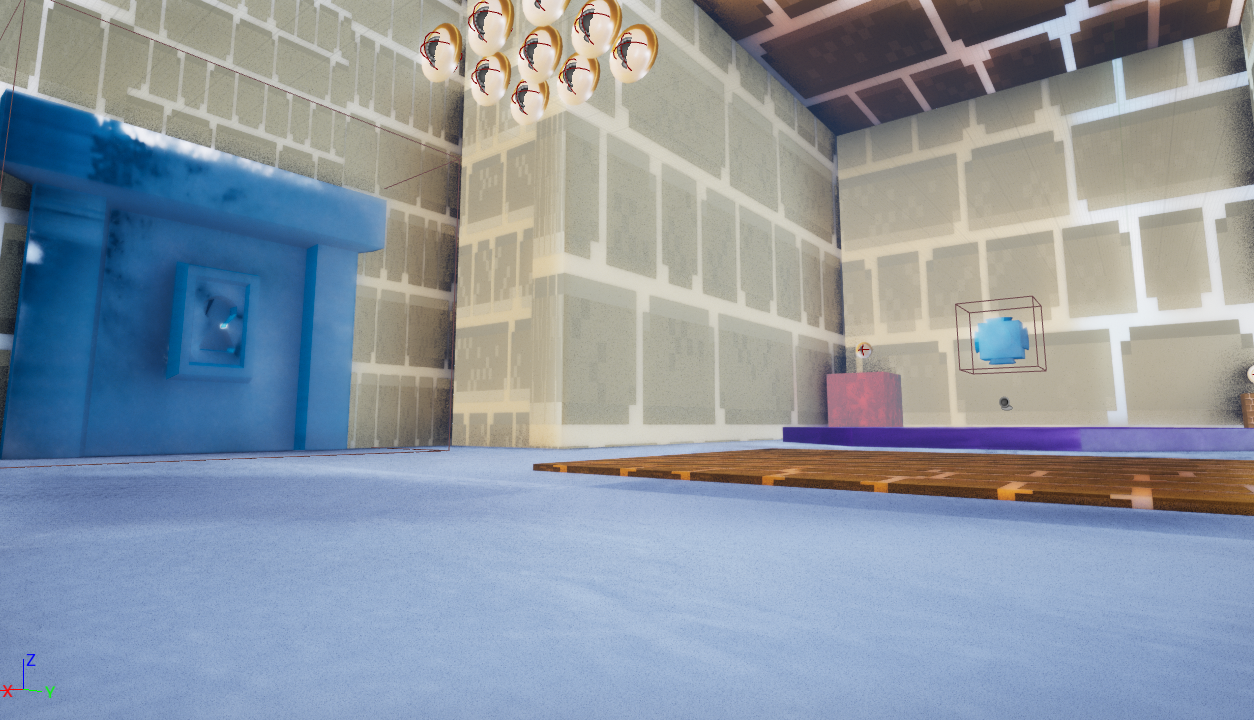
Museum Level (Concept Phase – Cut)
Early blockout and sketches for a level based around the Idea of being inside a Museum with a gameplay ability known to be able to make solid objects walk-through.
Explored theme, layout, and flow before the level was removed due to narrative and scope changes within our ideas for level design.
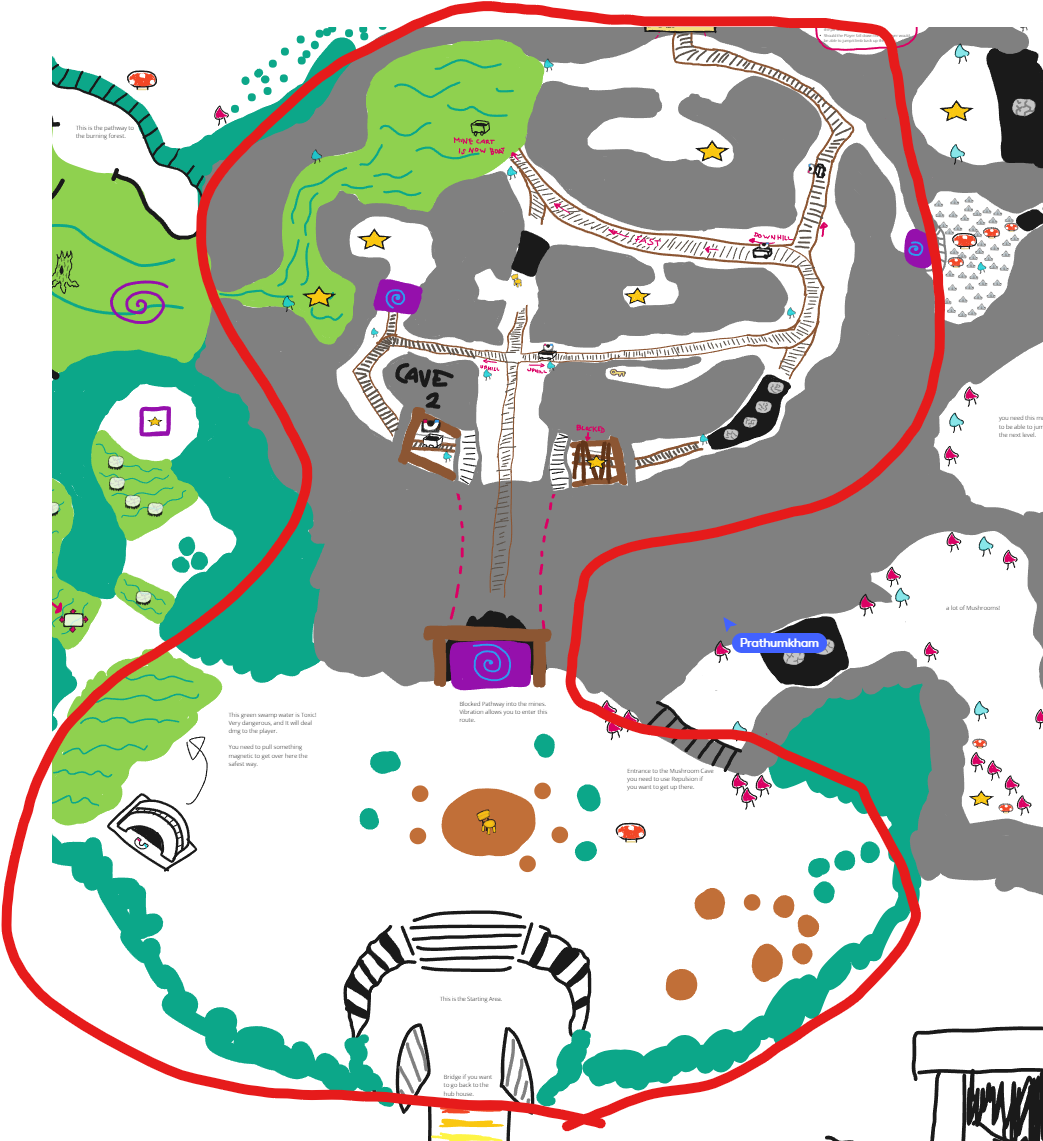
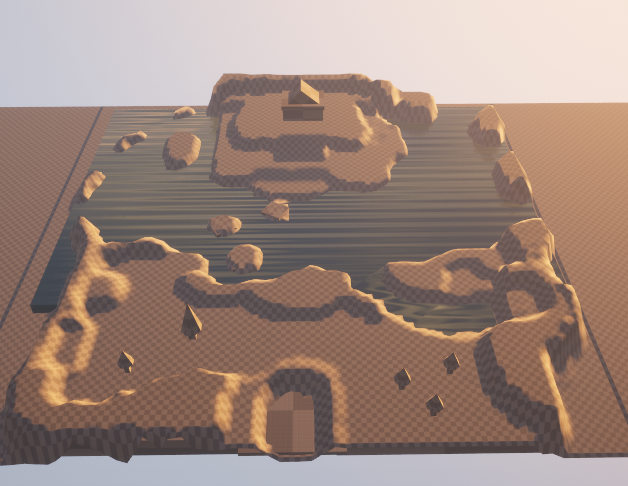
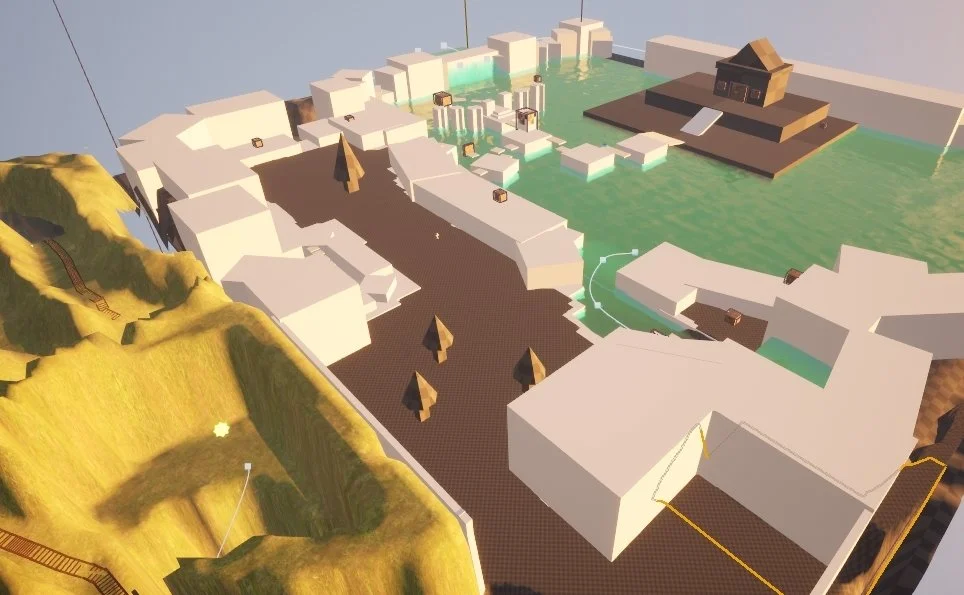
Evil Witch Forest Level (Co-Design – Cut)
co-designed a major late-game level intended to use all player abilities and puzzle mechanics.
Main responsibilities:
Designed a multi-path level featuring:
Poison swamp area
Underground cave with minecarts
Crystal mushroom biome
Co-built layout plans and flowcharts in Miro.
Developed initial blockouts before the level was cut due to timeline constraints.
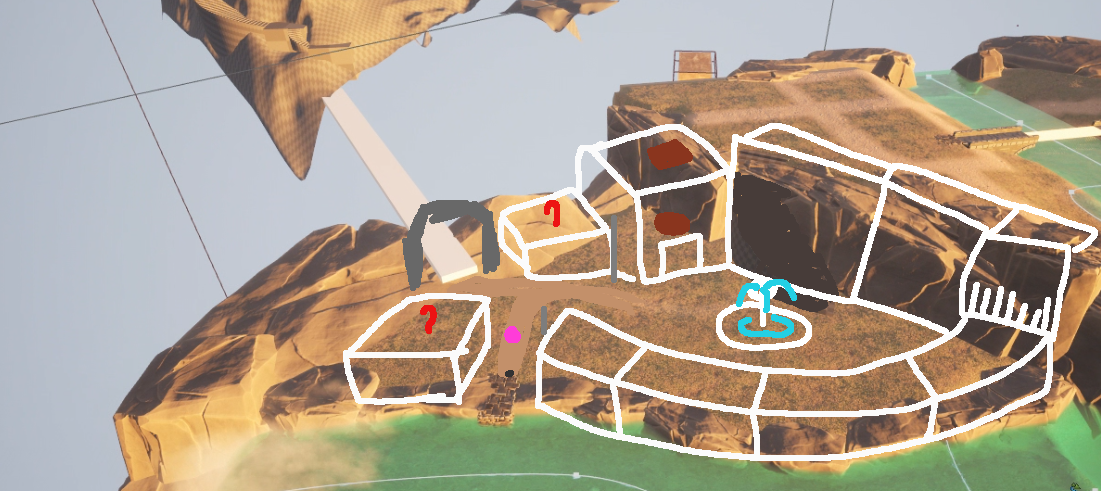
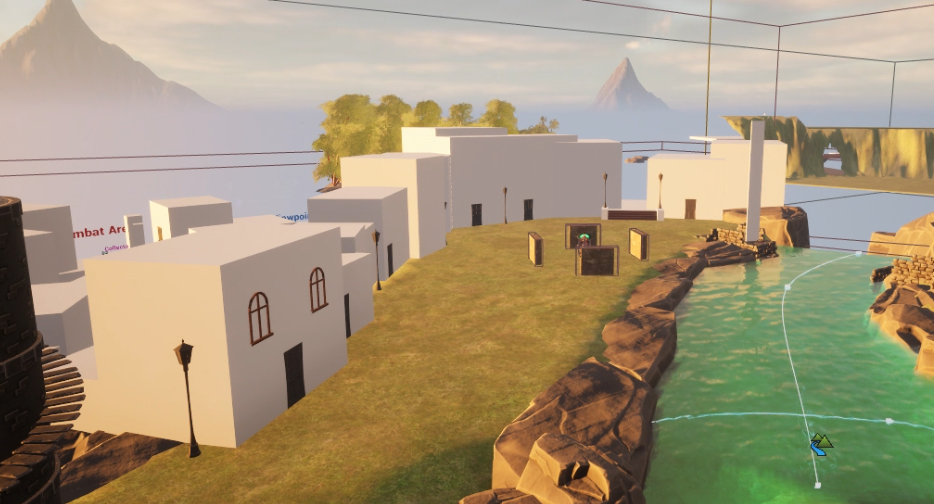
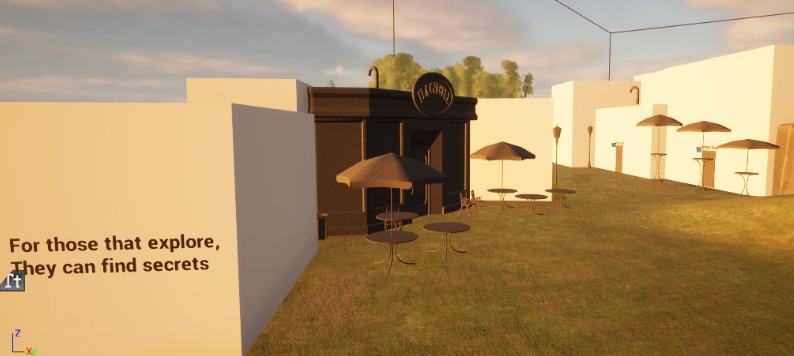
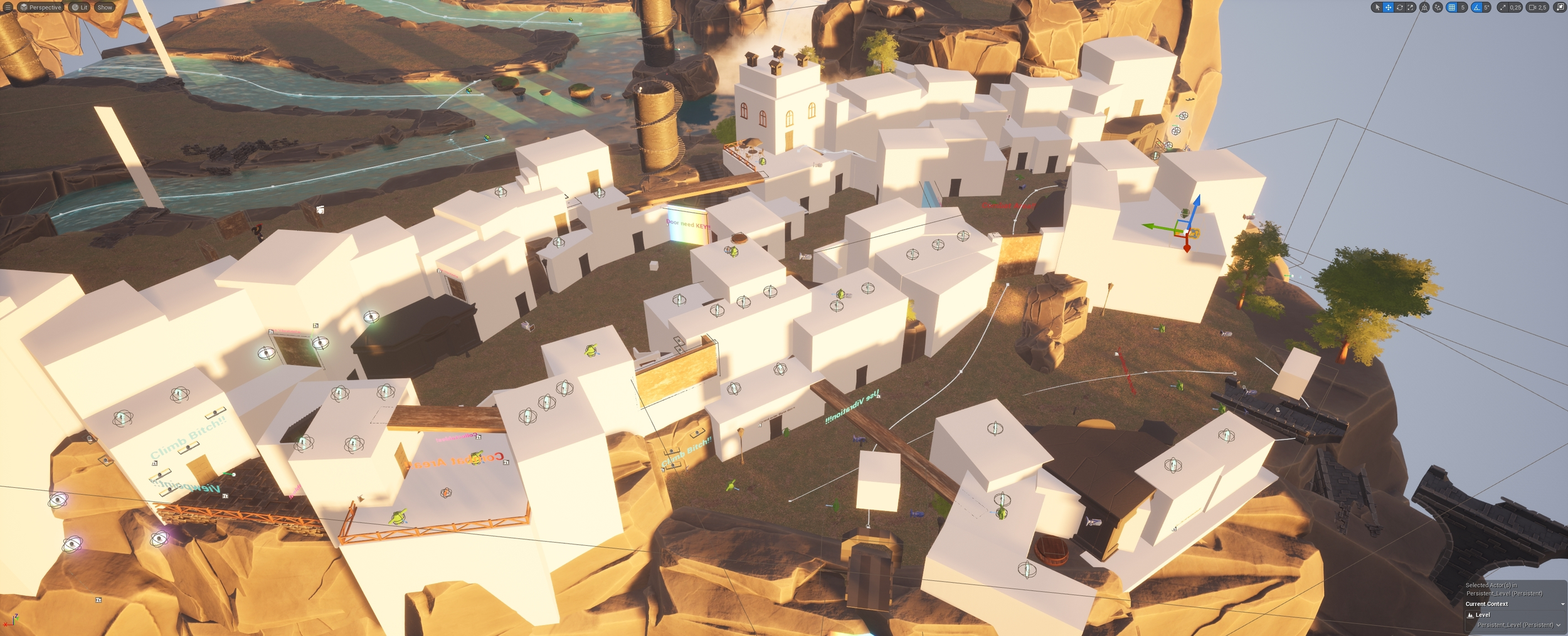
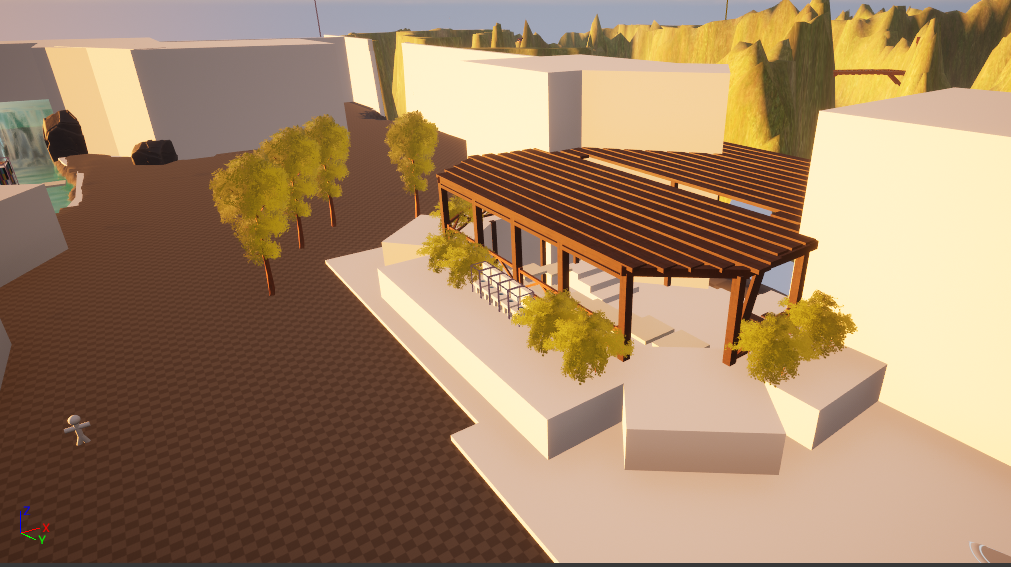
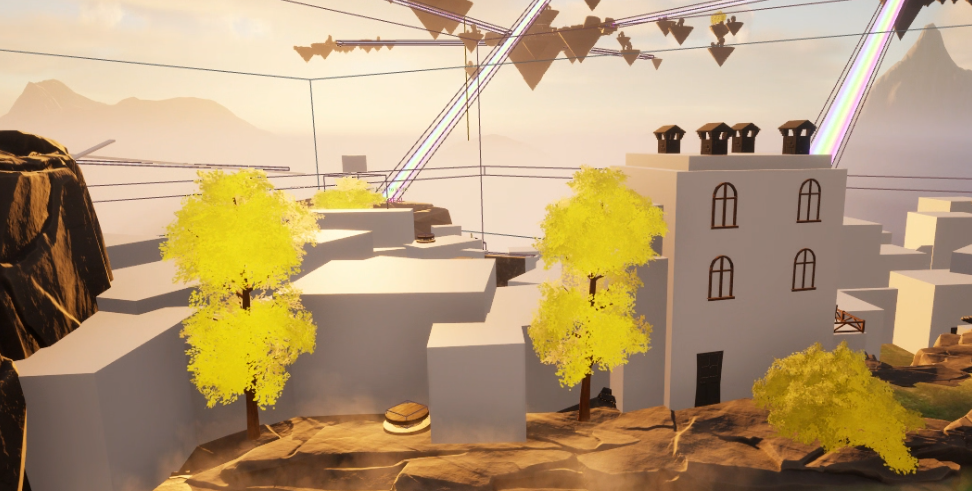
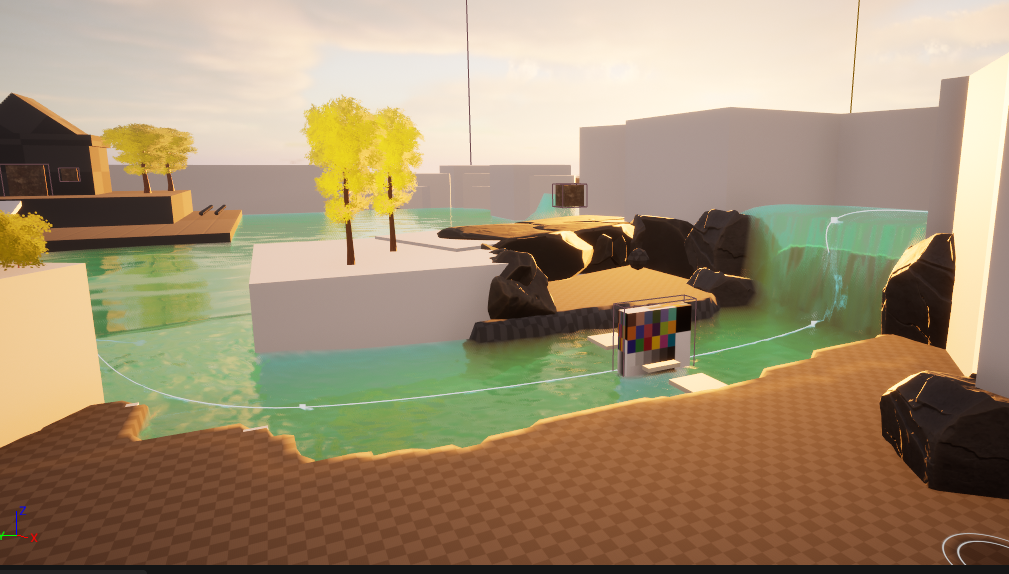
Sky Islands Level Dressing (Co-Design – Cut)
co-designed a major early-game level intended to use no gameplay abilities and only simple puzzle mechanics.
Main responsibilities:
Co-built layout plans with Lead Level Designer & blockout the environment intended for their vision.
level dress the level with the available art assets onto the level itself.
Because of decisions from our Leads, this level was eventually cut as well.
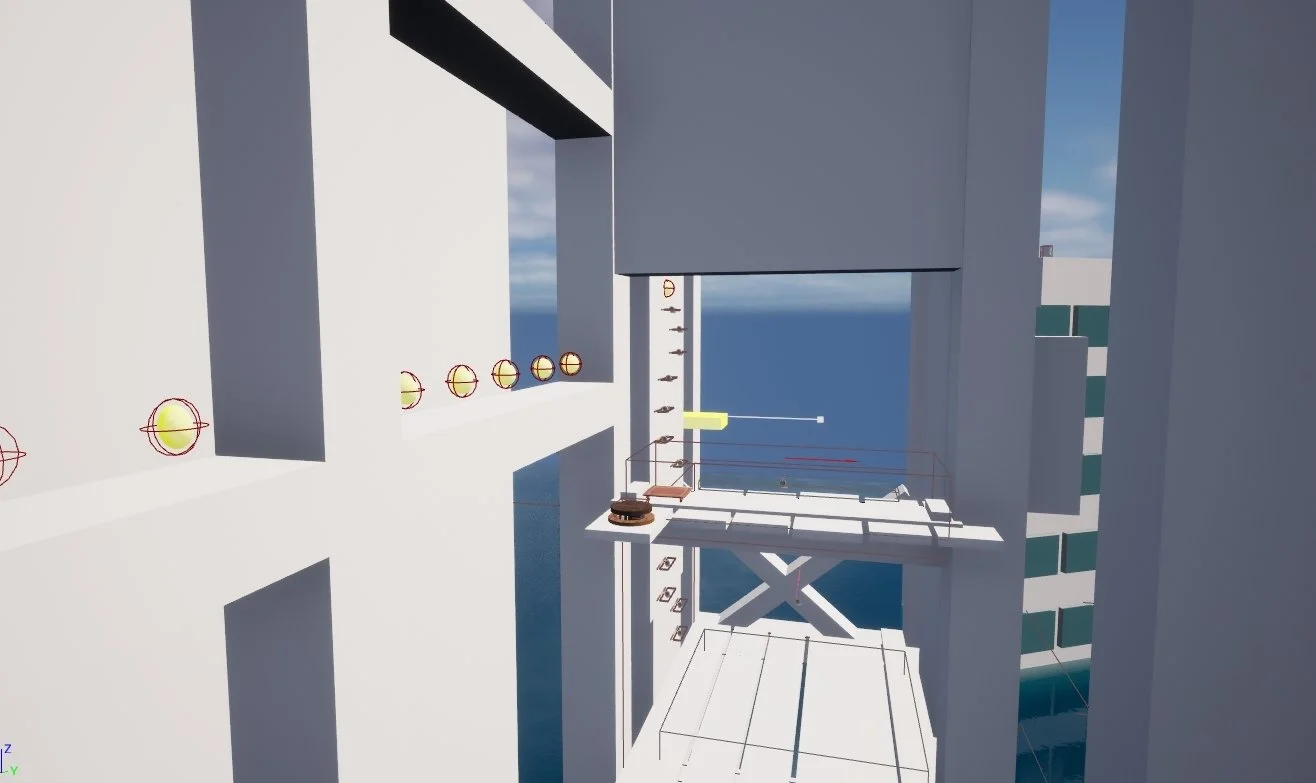
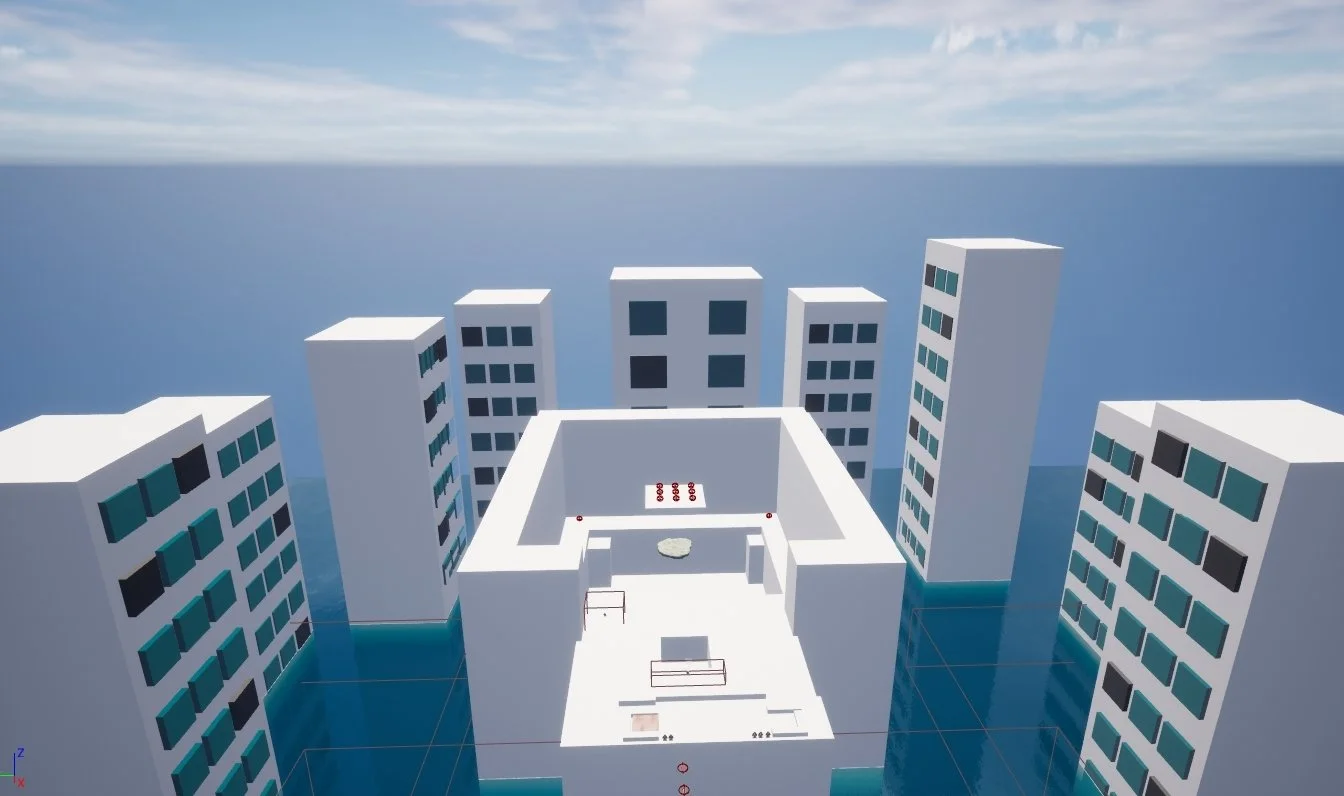
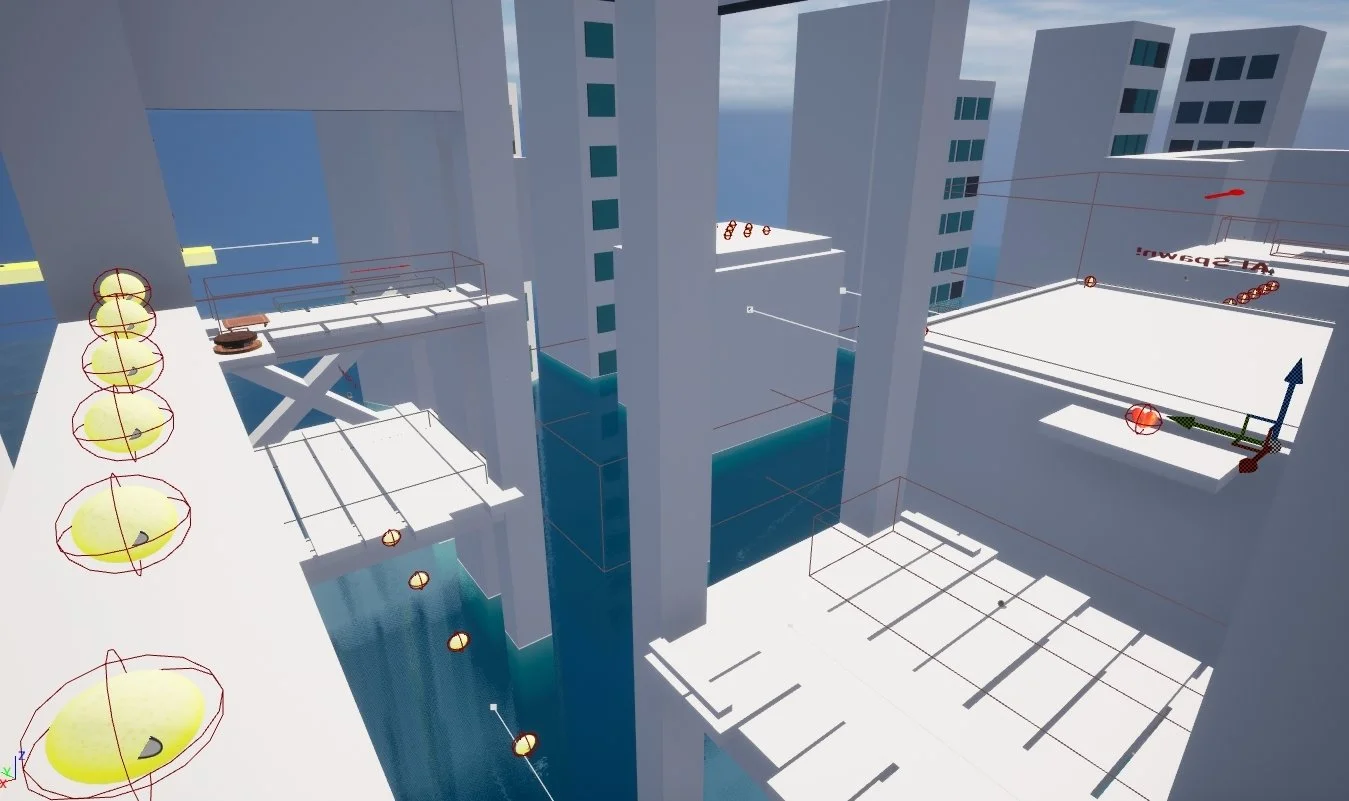
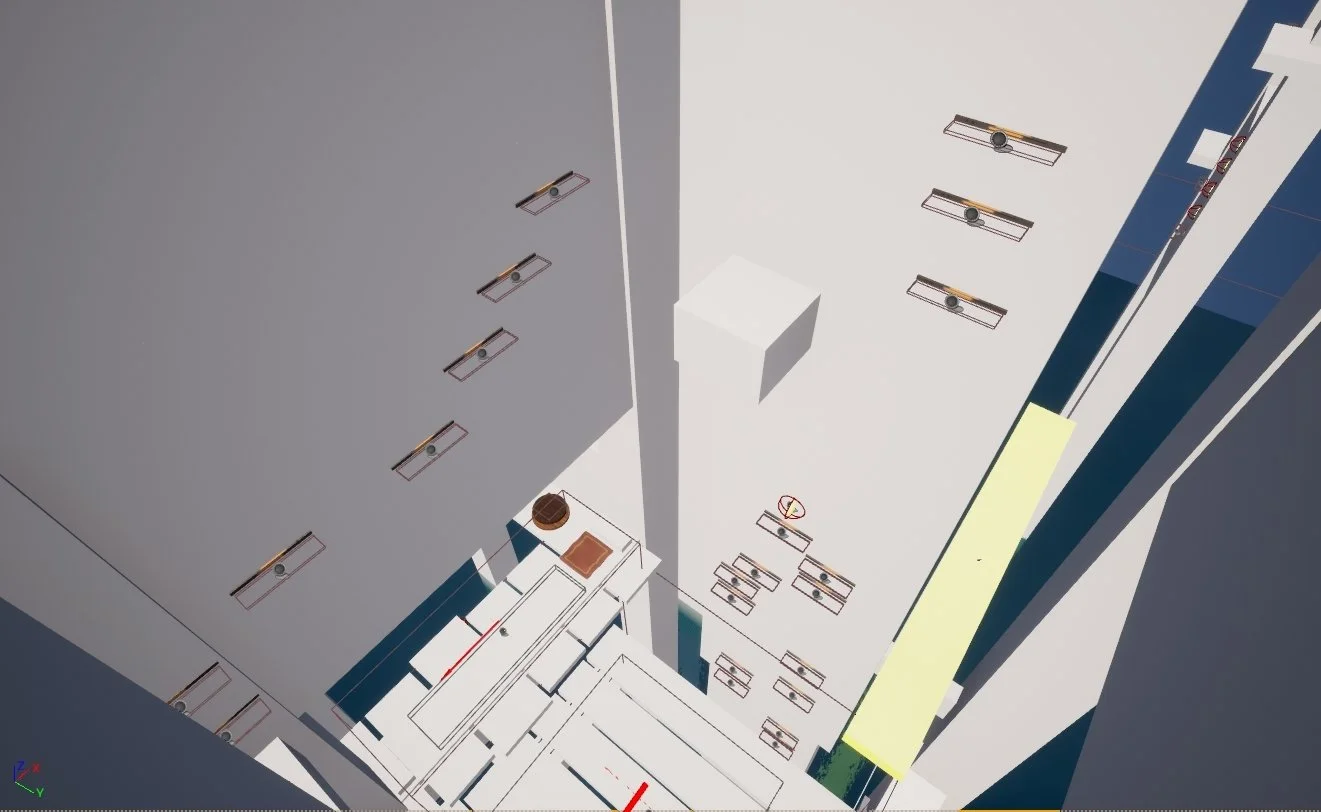
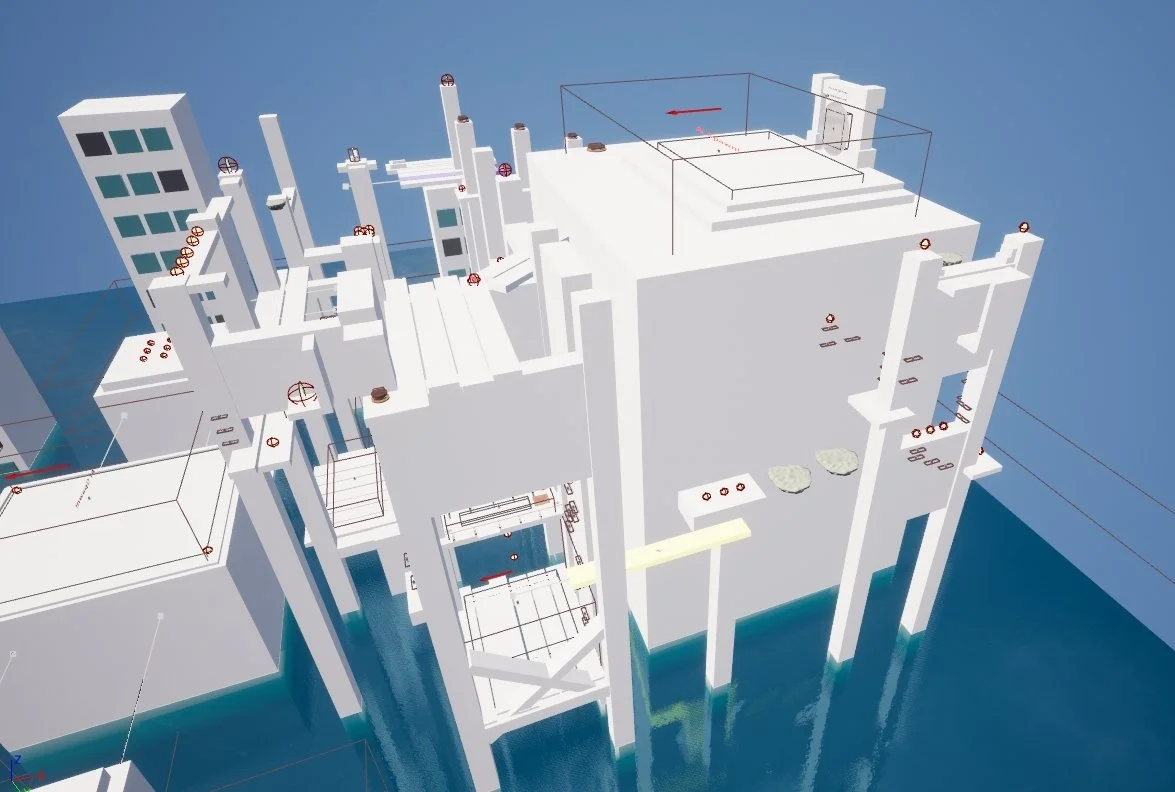
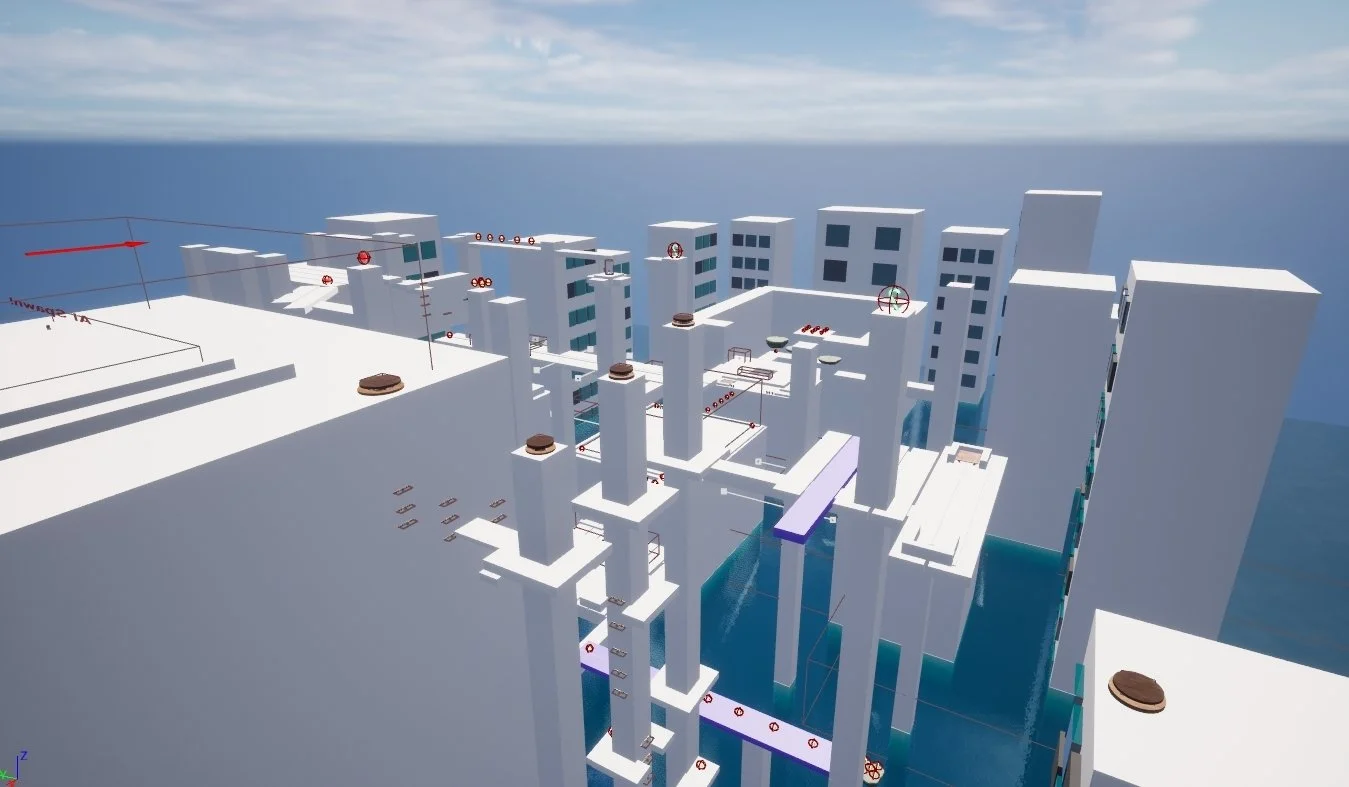
Construction Site / City Level (Blockout & Mechanics Integration – Iterated. - Cut)
Independently developed the initial blockout for a vertical, traversal-focused city level:
Designed multiple pathways leading to a rooftop objective.
Implemented early interactions using the Magnet Ability, including elevators, movable objects, and platform logic to your advantage.
Later collaborated with other designers as the level expanded, though the final version was ultimately cut during scope reduction.

VFX Artist
Using Unreal Engine’s VFX tools, I created VFXs such as:
Collectable VFX (candy canes, health pickups)
Player ability & movement effects
Environmental effects
Pickup sparkle/shine effects and collection bursts for collectables.
I worked with the art team and with the tech team to ensure effects supported gameplay clarity and visual readability within the team's needs.
QA Lead
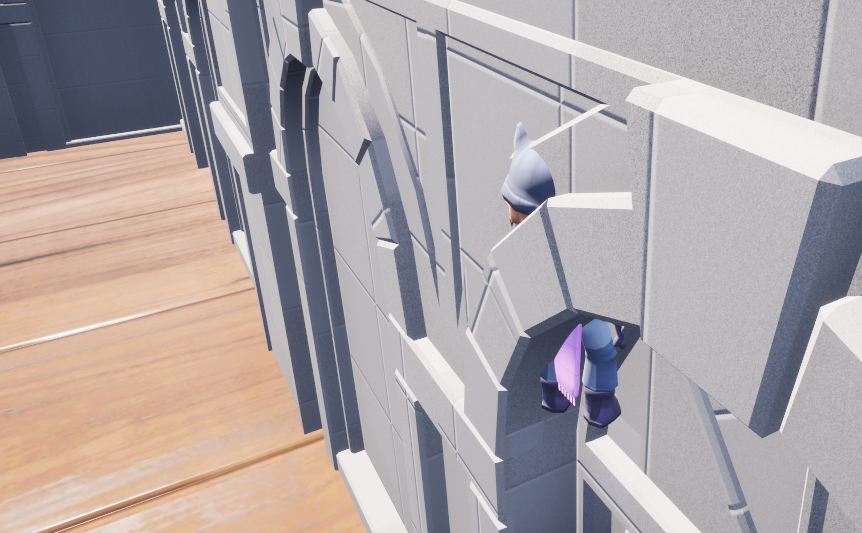
As QA Lead, I coordinated playtesting across the project and ensured gameplay consistency.
My responsibilities included:
Testing each new build and documenting bugs
Checking collision, navigation, and player mechanics
Identifying sequence breaks, unintended shortcuts, and gameplay exploits
Reporting issues to programmers and designers with clear reproduction steps
Verifying fixes and maintaining quality during iteration
Pixel Art
As a small bonus from what I learned in one of my previous projects in unreal engine, was to add a small easter egg of the game Itself inside a TV screen that one of the artists created with a pixel art animation that I created.
Project Outcome
Although several levels and features were cut due to time and scope adjustments, this project gave me extensive hands-on experience with:
multi-discipline collaboration
level design process (concept → blockout → iteration)
gameplay/system testing
Unreal Engine VFX workflows
adapting to production changes.
Health Decrease Game - 4 Week Level Design Project (Futuregames, 2023)
Roles: Level Designer · Puzzle Designer
Engine: Unreal Engine 5
Team Size: 5 Designers
Overview:
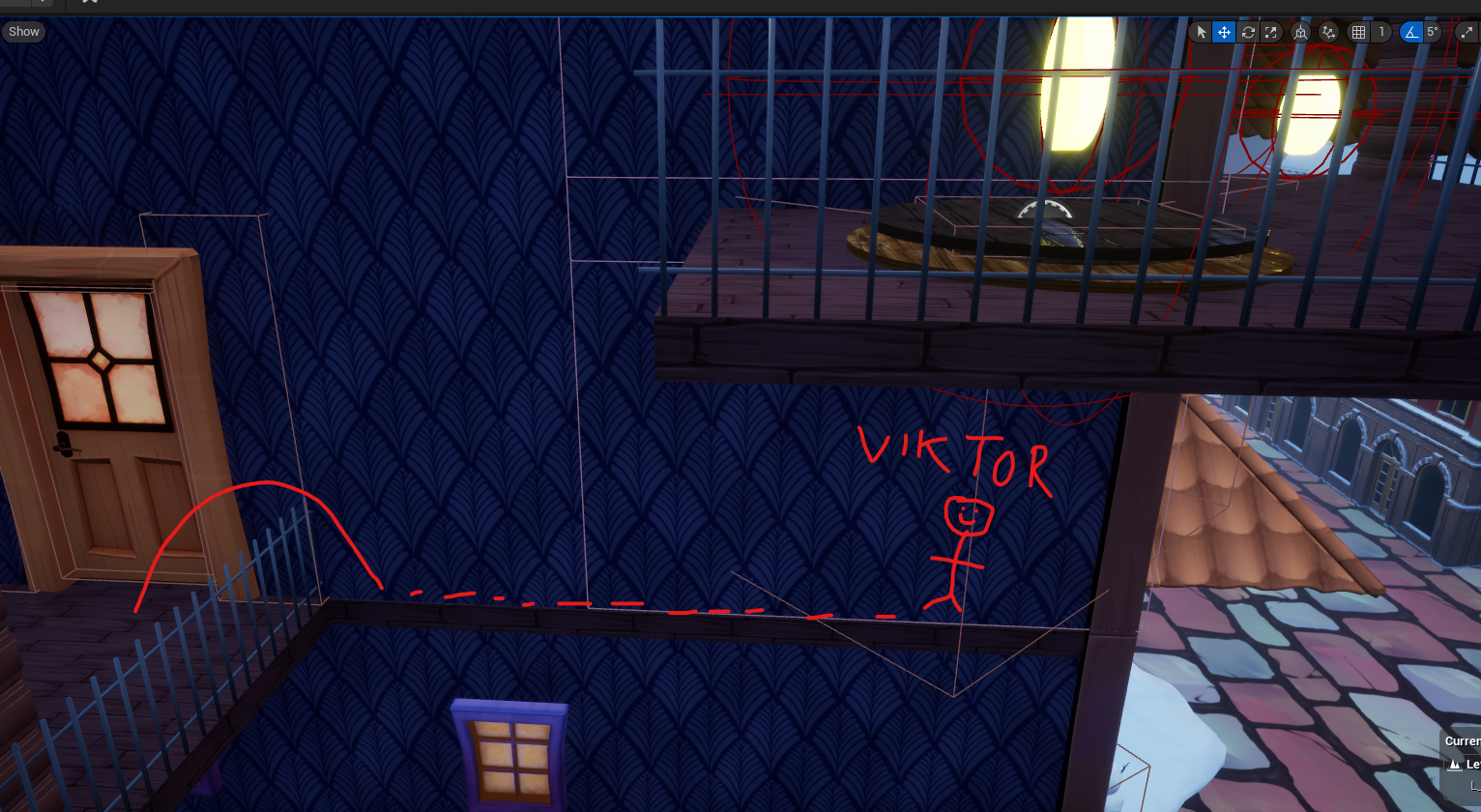
As part of a Level Design assignment at Futuregames, our team was tasked with creating a small game prototype where a core system decreases over time, such as a timer, health bar, or light source.
We had 4 weeks to design, block out, and implement a fully playable experience using only our skills as designers (no external art assets or coding support).
Our team created a hotel-themed exploration puzzle game, inspired by Luigi’s Mansion 3 but on a much smaller scale. Each designer created their own room and gameplay puzzle, all connected into a single coherent level.
My Area: Swimming Pool & Bathroom Zone
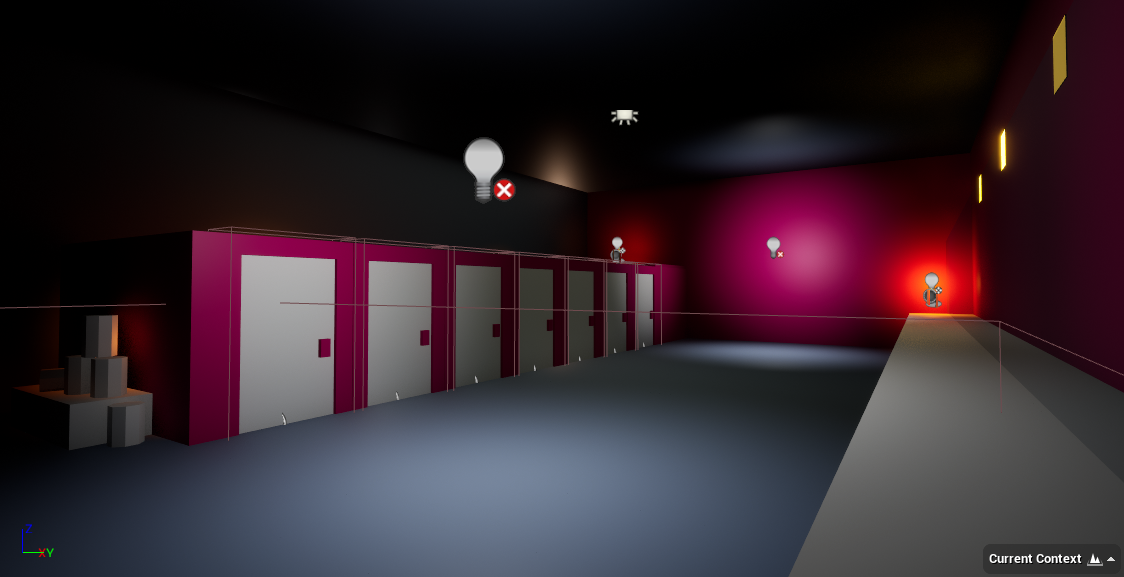
I designed and implemented the Swimming Pool area, along with both the male and female bathrooms.
My goals for the space:
Create a visually distinct area using blockout geometry & colors
Lead the player naturally toward the puzzle
Integrate the core mechanic (decreasing light source by touching water)
Connected my puzzle to the rest of the hotel through shared systems
Environmental elements included pool platforms, diving boards, deckchairs, pool toys, warning signs, and atmospheric lighting.
Core Mechanic: The Light Source.
The player carries a candle that:
slowly burns out over time
reduces visibility as it weakens
burns significantly faster in water
results in game over if extinguished
The objective of the entire level is to collect five keycards, one in each designer’s area, then escape through the main lobby.
My puzzle was designed around how water can affect the candle
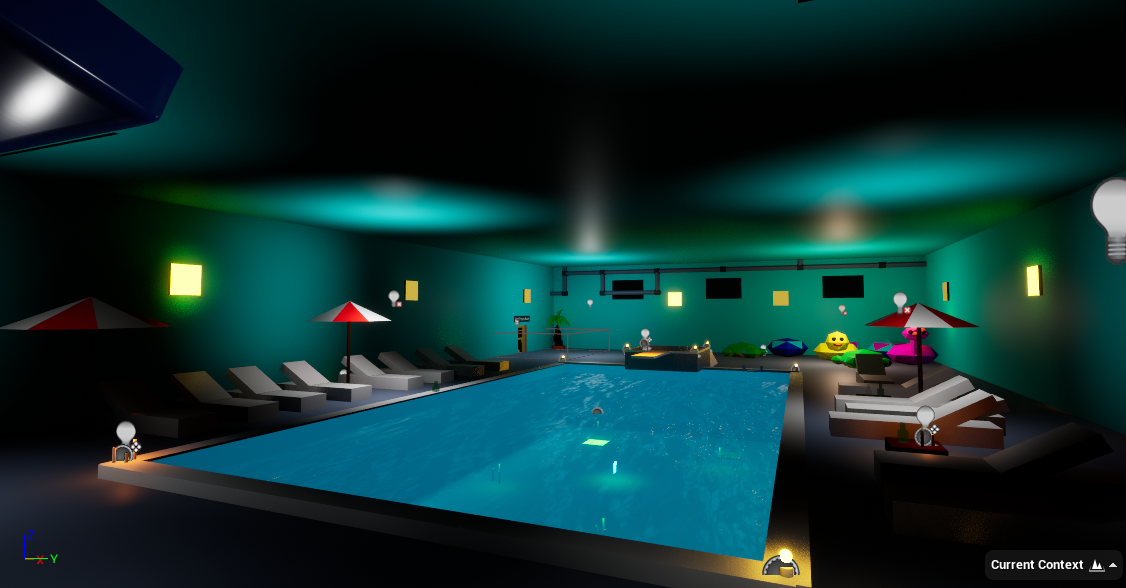
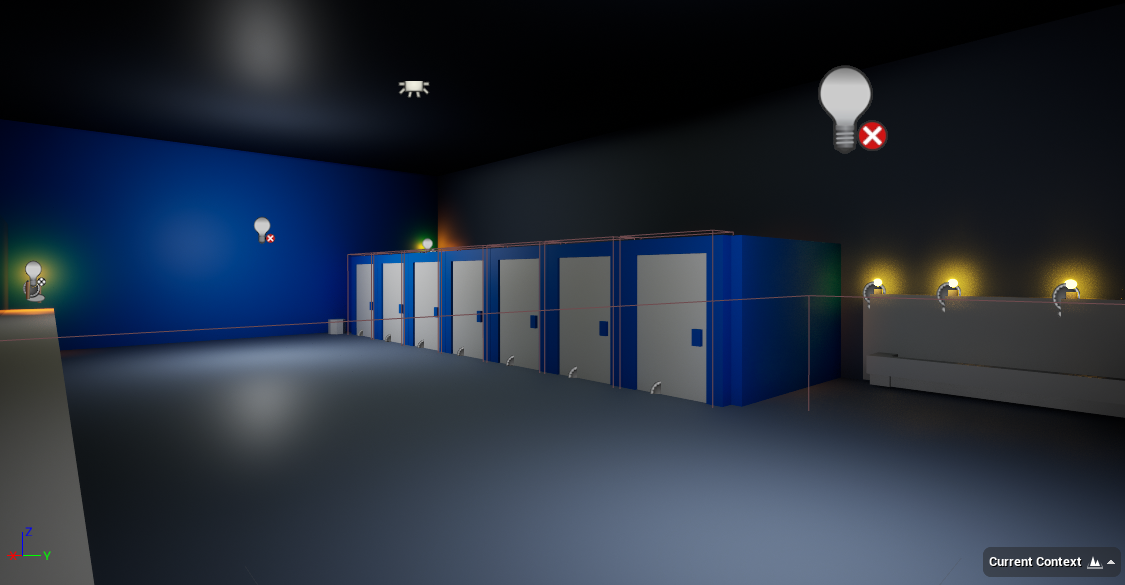
Puzzle Design: Draining the Swimming Pool
Idea:
The keycard in my area is clearly visible at the bottom of the pool.
However, entering the water drains the candle rapidly — making it impossible to retrieve without solving the puzzle first. - Also It is impossible to enter the water since the poolwater is just an object with a texture on it. ( wasn’t able to add a swim feature into the game. )
Puzzle Flow:
1. The player spots the keycard underwater directly!
Immediate clarity on the objective
Encourages exploration to find a solution
2. Player discovers they can’t enter the water
Water rapidly drains the candle
Forces players to rethink their approach
3. Puzzle path leads through the bathrooms
One of the bathrooms is unlocked to enter.
The engine key required to drain the pool is hidden inside a bathroom stall
4. Player obtains the Engine Key
Unlocks access to the pool area engine room.
5. Player activates the water-drain machine
A short camera cutscene shows the water lowering
Allows the player to grab the keycard.
6. Player returns to the pool to retrieve the keycard
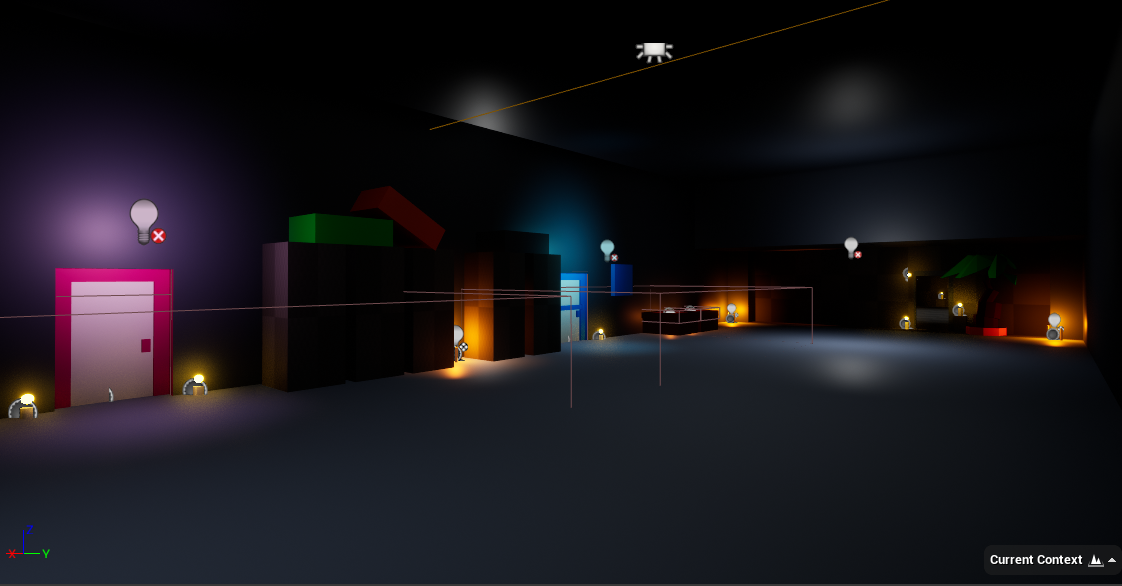
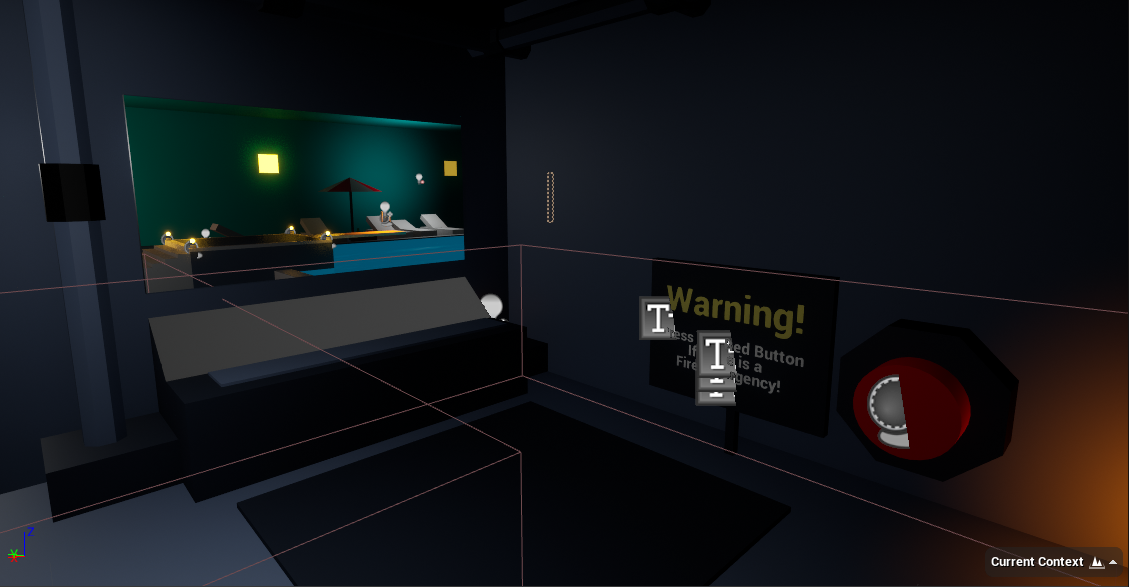
Technical Design Challenges & Solutions
Problem:
Draining the water would also cause the underwater keycard to disappear, making the game unbeatable.
Solution 1:
Place the keycard in the engine room instead!
Solves the problem completely!
Problem:
Players may not click the “red button” to drain the water. Making the restaurant / dinner part a confused / annoying backtrack if missed.
The player will have a harder time to know what to do within this area. As the keycard is no longer visible directly.
Makes the area less unique with no point really to have the swimming pool besides aesthetic.
Solution 2:
Only drain the water 20% visibly during the cutscene.
After the cutscene stops, delete the water actor completely-
Players would believe the water is fully drained, even though it was removed behind the scenes.
This created the illusion of a full pool drainage without breaking the keycard logic!
Cross-Area Integration
My swimming pool area was also connected to the Restaurant / Dinner Area rooms puzzle made by another designer on our team:
A pipe in the swimming pool area is linked to the restaurant / dinner area as the kitchen is on fire, making it impossible to pass through!
Draining the pool water would allow the water to flow into the kitchen opening up a passageway for the player to enter!
Even if the player enters the restaurant / dinner area first, a shortcut can be used if the restaurant was their first location to enter.
This created meaningful inter-room interaction and demonstrated team coordination and systemic thinking between different areas. And not just all areas are their own independent zone. - Though more areas could have used this idea into their levels.
Outcome
This project taught me valuable skills in:
Designing puzzles around core mechanics.
Communicating intent through environment layout.
Problem-solving within Blueprint limitations.
Creating interconnected level logic collaboratively.
Using Unreal Engine for blockouts and scripted events.
Despite being a small 4-week assignment with only designers, the experience strengthened my understanding of pacing, player guidance, and puzzle clarity.
Redd’s 3D Adventure - 3-4 Week First Solo Project (Futuregames, 2023)
Roles: Game Designer · Level Designer · 3D Artist.
Engine: Unreal Engine 5
Team Size: Solo Project
Overview:
For my first Unreal Engine assignment, I was tasked with creating a complete small game prototype within 3–4 weeks. The only requirements were that the game needed a clear core mechanic, as well as a defined start and end.
I chose to create a simple 3D platformer featuring exploration, collectables, progression gates, and size-changing power-ups.
Core Gameplay
The game follows a traditional 3D platformer structure, where the player can:
Move, run, and jump
Collect coins, keys, hidden treasures, and power-ups
Restore health via pickups
Unlocking new parts of areas by using keys
Reach the final objective represented by a giant diamond as a collectable.
The goal of each level is to explore, collect items, and progress through gated sections until reaching the end.
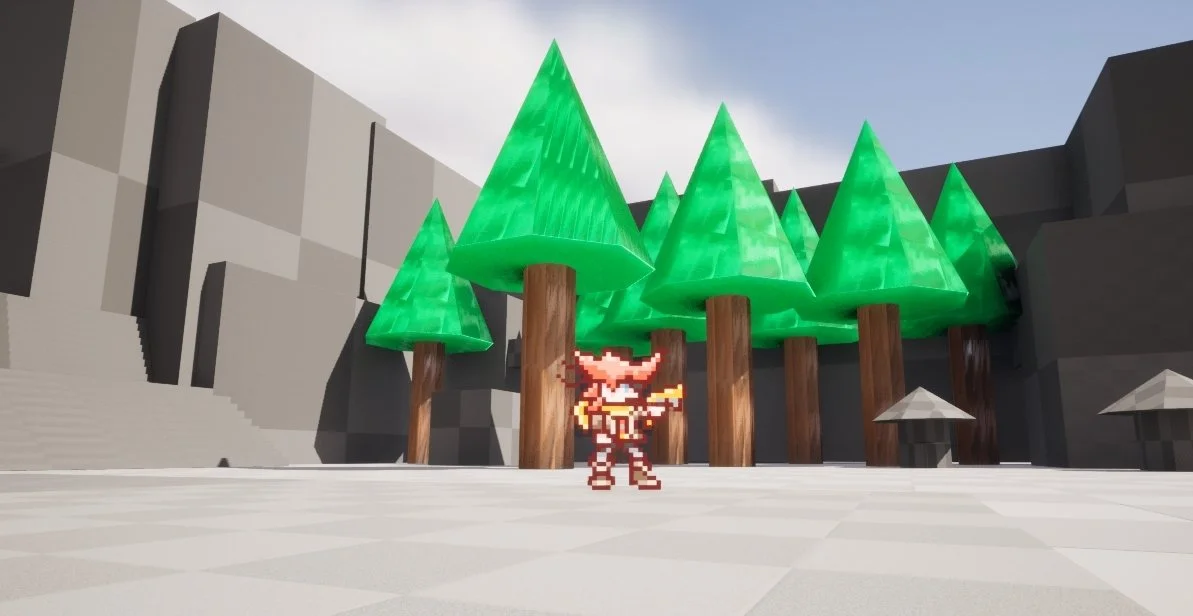
Unique Twist: 2D Character Sprite in a 3D World.
One of my main creative challenges I set for myself was to replace the default player model within my own 2D pixel sprite, known as Redd who is a character from one of my previous 2D projects I have worked on. I used a plugin called PaperZD which allowed me to use animations with sound effects added into the frames with a more controlled approach.
My goal was to create a “Paper Mario–style” character who appears as a flat sprite inside a 3D environment.
Although I wasn’t yet able to achieve full directional rotation (front/back/side), I was able to make the player character move around in the scene with playable animations and sounds added into them.
This gave the game a distinct visual identity compared to the others base models and taught me early lessons about mixing 2D and 3D assets.
Environment & Asset Creation
For the world-building, I used a low-poly aesthetic consisting of:
blockout mountains
simple tree shapes
stylized environmental platforms
basic geometric structures
To support the gameplay, I created several simple 3D assets using Maya (free trial):
coins
keys
size-changing power-up items
collectable items
This allowed me to practice basic 3D modeling and UV mapping while keeping the art style consistent and readable.
Level Design
I designed and implemented two levels:
Level 1 — Introduction
Introduces core movement and jumping
Teaches collecting coins, keys, and basic navigation
Introduces platform challenges and hazards in a simple layout
Level 2 — Dungeon exploration.
more closed in area, more dangers.
Hidden pathways for small-size form
Higher platforms requiring big-size form
More complex key and gate structure
Greater variety of collectables and environmental challenges
Each level was built using Unreal’s blockout meshes and simple props to focus on design clarity over visual detail.
Power-Ups: Size Changing Mechanic
I implemented two power-ups that alter the player’s size and movement capabilities:
Big Size.
Slower movement
Higher jump height
Can reach elevated platforms
Small Size.
Faster movement
Lower jump height
Can enter narrow tunnels and hidden areas
This introduced simple puzzle elements by requiring the player to switch between forms to access different parts of the level.
Outcome
“Redd’s 3D Adventure” was my first experience building a game inside Unreal Engine from scratch.
Through this project, I gained foundational skills in:
Unreal Engine level design
Blueprint scripting
2D/3D asset integration
Simple 3D modeling in Maya
Creating structured platformer levels
Designing mechanics with clear player feedback
The project established many of the core design and technical skills I could later use in more advanced multi-person team projects.